

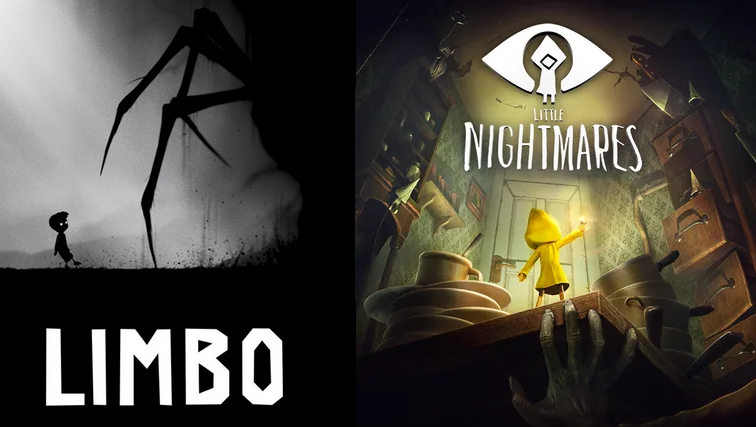
The horror genre and the indie scene are a match made in deeply unsettling heaven. The purpose of horror is to disturb, disorient and discombobulate you, and while this is just as easily achieved by putting spooky scary skellington jump-scares around every corner, good horror gets under your skin in a subtle, personal way that mainstream video games have always struggled to accomplish. Don’t get me wrong, the Resident Evils and Dead Spaces of the world still have their place in the discussion of horror and in the hearts of many fans, but indie games have more freedom to allow creativity to run wild, for better and for worse… and the worse is sometimes also for the better. Horror is weird.
Enter 2010’s LIMBO, which along with Braid and Super Meat Boy is one of the defining titles of the early indie scene; emphatically not the birth of indie, but that curious time when more and more people were slowly beginning to realise that two guys whose previous work was mostly Flash games about dead babies could, in two years, design and code an entire game with more skill, charm and personality than a team of a hundred under Microsoft. Frequently included on lists of the greatest video games of all-time, LIMBO’s three-hour minimalist monochrome story left such a lasting impact on the genre that ‘Small child with big head explores terrifying and inexplicably hostile world’ became something of a stereotypical set-up for other experimental indie horror games; a feat made more impressive when you realise upon recollection that barely any other games actually copied this format, it just feels like they did because LIMBO felt so influential, and deservedly so.
Enter 2017’s Little Nightmares, a game which shamelessly wears the influence of LIMBO on its sleeve; a game in which a small child with a big head explores a terrifying and inexplicably hostile world. While Little Nightmares wasn’t met with the same critical acclaim across the board – understandable, as seven years had passed since the release of LIMBO – it was still received very positively, appearing on several lists of the Best Games of 2017, with a strong consensus even amongst more critical voices that the art style and direction of the audio and visuals were practically perfect.
LIMBO and Little Nightmares will also likely be the two most similar games I ever pit against each other. I enjoy games that are similar enough, but with a few notable differences; Mach Rider and Excitebike are both motorbike-themed NES launch titles, but Mach Rider is 3D and Excitebike is 2D. Haunting Ground and Rule of Rose are both survival horror PS2 titles with young female protagonists and their canine companions, but the former is ‘a bit Clock Tower’ and the latter is ‘a bit Silent Hill’. LIMBO and Little Nightmares are extremely similar, both designed with similar goals and similar execution. While LIMBO is true 2D and Little Nightmares is 2.5D – well, technically 3D but viewed on a mostly 2D plane, as if watching the game take place in the opened cross-section of a dollhouse – then in broad strokes, their gameplay, direction, expert use of minimalism, etc, are all extremely close to each other.
I could pretend that I’m looking at this in terms of the question “Is a (widely-considered) great game from 2017 better than a (widely-considered) exceptional game from 2010?” because that would honestly be an interesting topic; obviously there are games that stand the test of time no matter what, but as technology marches on, a completely unremarkable game from 2005 might be – on paper, at least – superior to a beloved cult classic from 1997. But that would be dishonest, because that’s not why I’m talking about LIMBO and Little Nightmares. The real reason I want to write this is simply because I love both of these games very much and this is a great chance for me to spend a few thousand words gushing about how fantastic they both are, before reluctantly choosing a favourite.
So, let’s move onto LIMBO first, and a happy Halloween to you all (there is zero chance that I finish this before Halloween. EDIT: Holy shit, I did it! … Or I missed last year’s deadline so badly that I pushed it back to this year.)
In 2006, game designers Arnt Jensen and Dino Patti formed the studio Playdead, for the sole purpose, at the time, of developing LIMBO, which Arnt – a former developer at IO Interactive (Hitman, Kane & Lynch) – had been working on in his spare time since 2004. With the help of some government grants and some investors who had some… less than stellar suggestions for the game (“Give the LIMBO player-character a moustache!” – This actually happened,) LIMBO released in 2010 to widespread acclaim and critical and commercial success; enough so that Arnt and Dino were immediately able to buy back full control of the company from those same investors, who presumably went on to ruin several other promising indie games instead.
The plot of LIMBO, as outlined on its Steam store page, is as follows. “Uncertain of his sister’s fate, a boy enters LIMBO.” And that’s it. Not only is that all that you’re getting, it’s also all that you need, as the lack of any further clarity only adds to the unsettling and mysterious nature of the experience. The player awakens in a dark forest and walks to the right, encountering all sorts of malicious dangers – some clearly manmade, some clearly natural, and some that either straddle the line between or defy explanation altogether – until you finish the game two to three hours later.
LIMBO is not just widely regarded as one of the best video games of the 2010s, or even of all-time, but one of the best indie games ever made at a time at a very formative time during their introduction to the wider game industry. Titles like Braid and World of Goo had already proven successful, but they were still very much the exception and not the rule. 2010 was the year of Super Meat Boy, BIT.TRIP Runner, Amnesia: The Dark Descent and more, and even up against these, LIMBO is often considered the most important and influential indie game of the year; possibly even the decade. IGN, GameSpot, Eurogamer and Game Informer all awarded it a score of 9/10, and at the 2011 Game Developers Choice Awards, it received more nominations than any other game, including Red Dead Redemption, Mass Effect 2 and Minecraft.
Selling more than three million copies and making more than $7.5 million, LIMBO was not just a resounding success in every possible way, but it also proved the valuable industry lesson… that shareholders and investors have no fucking idea what they’re talking about, and – sorry, I normally leave these at just three paragraphs, but, I – a moustache?!? Investors were worried that the surprisingly visceral monochromatic death scenes would make players uncomfortable (heaven forbid a horror game make players uncomfortable!) and so they wanted to give the boy a moustache so that he looked older. They also wanted LIMBO to just… have multiplayer, because multiplayer was very popular. Jesus Christ. The thought that these people have any influence on video game design is more terrifying that anything that LIMBO or Little Nightmares could conjure.
Anyway! Let’s leave the big nightmare of unqualified management and consumer capitalism for now, and move onto some… littler nightmares.
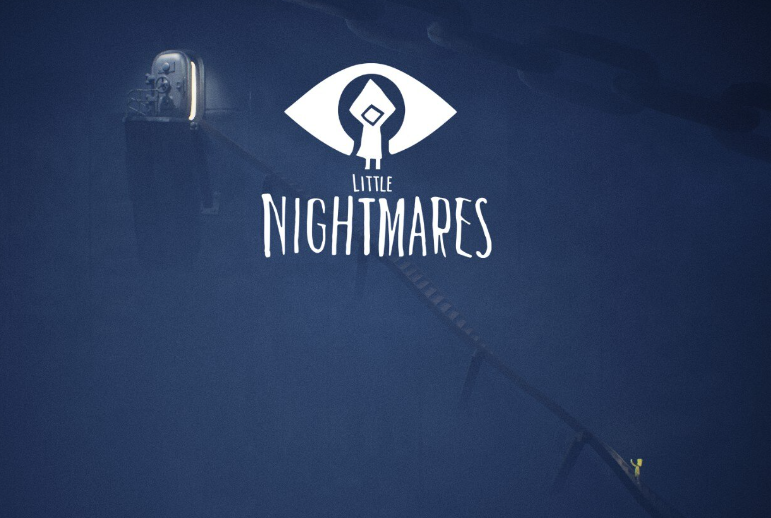
In 2004, Tarsier Studios was formed with the goal of developing the sound-based puzzle-platformer The City of Metronome, a steampunk horror game heavily inspired by the works of Studio Ghibli. Because we are not allowed to have nice things, the game could not secure a publisher and was cancelled in 2007. But Tarsier soldiered on, finding success with well-received DLCs for the LittleBigPlanet series and the remake Tearaway Unfolded, but the rough framework for The City of Metronome was still in their minds, and when they revisited the concept in 2014, and found a publisher this time – Bandai Namco, after Sony stupidly turned them down – then they finally had the opportunity to make at least some version of the game they had initially envisioned all those years ago. A game called… Hunger.
…
But due to a Young Adult book series that was being adapted into some films at the time that was eating up the search results for ‘Hunger’ and ‘Games’, they soon decided to change the title to Little Nightmares.
Released in 2017, Little Nightmares tells the story of Six, a tiny young girl in a simple yellow raincoat who finds herself in the depths of a vessel known as ‘The Maw’. As she attempts to escape, survive, and find out what the hell is going on – probably not near the top of her list of priorities, but it’s an inevitable side-effect nonetheless – then she encounters several denizens of The Maw which give her a slightly clearer picture of the situation, not that this a) helps, or b) makes things any less oppressive and terrifying.
In comparison to LIMBO, Little Nightmares didn’t quite set the world on fire – although it did come out seven years later (one year after LIMBO’s own follow-up, Inside) – but it was still undoubtedly a critical and commercial success. With scores averaging 8.5-9/10 and nominations at the Golden Joystick Awards for Best Visual Design and Best Audio, and more than two million copies sold, the influence of The City of Metronome was finally realised thirteen years later, and it spawned a mobile spin-off in Very Little Nightmares, the sequel Little Nightmares II (with a third game on the way, albeit by a different studio, while Tarsier are currently working on Reanimal, which… looks strikingly similar to Little Nightmares,) a limited run of comic books, and even a potential television series that has not yet materialized, but is currently stated to have the involvement of Anthony and Joe Russo of Marvel fame, so if it ever does come out, expect Six to be a lot more sarcastic, voiced by Chris Pratt, and look out for her cameo in Avengers Endgame 2: End Harder.
With both games introduced, let’s get into the action. The creepy, isolated action.
Graphics

Once again, I feel like I should point out that the reason why I start off judging the graphics is that they’re most-often the easiest aspect to judge on a surface level, not that they are the most important. Although in the cases of LIMBO and Little Nightmares, phrases like ‘surface-level’ probably shouldn’t come into account at all; they both have their own unique artistic theme, and reducing it down to “LIMBO loses because it’s in black and white and Little Nightmares has, like, fifteen more colours than that!” would be as reductive and useless as it was incorrect.
That said, LIMBO’s monochromatic presentation is as iconic as it is fitting as it is… perfect. The world is literally and metaphorically in a constant state of darkness, with only the tiny lights of the boy’s eyes for comfort. You don’t meet other characters often, but it’s telling that their eyes are just as dark as the rest of their silhouettes. It’s hard to go into more detail regarding exactly why this stylistic choice works so well, because frankly, it just… does. It’s a simple touch that immediate sets the scene, the tone, and highlights the isolated journey you are on, while also making anything that does have brighter colours pop a little more in comparison.
Little Nightmares is much more colourful in comparison – I mean, it isn’t monochrome, so that goes without saying – but it’s no more reassuring to the player… not that it isn’t still beautiful. Little Nightmares has something of a dollhouse aesthetic, being viewed from a side-on perspective while Six, in her tiny yellow raincoat, cautiously makes her way through a world that is clearly not designed for someone her size; at least, from a narrative perspective. The game manages to strike a perfect balance of the environments being colourful and varied enough that they’re distinct and interesting to see – sometimes nauseatingly so – and yet still muted enough not to disturb the delicately unnerving tone. The lack of reluctance to utilize spectacle also leads to some visually stunning setpieces, like Six’s first glimpse outside of the Maw.
In contrast to the grim solitude of LIMBO, the animations add a touch of innocence to the affair; even something as minor and as simple as the childish way the boy reaches out his arms when he approaches something that he can interact with, or the way he flings his arms forwards when jumping. This innocence makes the setting even more unsettling when the boy has to do some rather nasty things to proceed, such as dragging a corpse out of a lake to trigger a trap, or pulling the leg off of a giant spider. And we can’t bring up contrast without a mandatory mention of the shockingly gory albeit brief death animations, never tacky or exploitative, but genuinely shocking in a way that Mortal Kombat fatalities haven’t been for more than twenty-five years. And there’s an option to turn them off, if you would prefer.
Little Nightmares uses the same method in reverse; the dollhouse aesthetic already lends a childish air, but the unnatural movements of the various inhabitants of the Maw are as unappealing as they are fascinating, from the stiff movements of the long-armed Janitor, whose skin has somehow sagged down so much from his forehead that it’s covering his eyes, effectively blinding him, to the slow, lumbering stagger of the twin chefs, who ploddingly skulk/thump menacingly around the kitchen. The basic design, idle behaviours, and unnatural stalking animations of the various denizens of the Maw are disgusting, but in the greatest possible way for a horror game that works by slowly raising the tension via your surroundings.
It’s this attention to detail in the design process that I think has to give Little Nightmares the win; not because it’s necessarily more unsettling than LIMBO, but because it manages to be just as unsettling while giving the player a much more detailed view of exactly what is causing them grief. This isn’t a case of style over substance or vice versa – both games are more-or-less flawless in that regard – but for Little Nightmares to accomplish what it did, while giving the player a much more revealing view of their surroundings, is just the tiniest fraction more impressive to me.
Gameplay

It’s hard to quantify the quality of the gameplay of two games in which the primary controls are basic movement, a single button to interact with things, and… that’s it, and yet both LIMBO and Little Nightmares didn’t need anything more to provide a concise and tightly-designed horror experience over a three-to-four-hour runtime. I mean, Little Nightmares technically also has a run button and the ability to crouch, but that’s about all.
It’s no surprise then, given the limitations of your abilities, that most of the obstacles in LIMBO are environmental. Recognizing and avoiding traps, both natural and manmade, is a core tenet of gameplay that never quite leaves; although over time, the environment itself because so inexplicable – though never less dangerous – that perhaps the entire world is the biggest trap of all. But while LIMBO may have a few challenging spots that take a few attempts to get through, being limited to just two dimensions means that you will absolutely never be overloaded with information to the point where it prevents you from quickly interpreting what you are expected to do next.
To its credit, Little Nightmares also signposts your objectives in a clear and easy to decipher way, which is once again a slightly more impressive accomplishment due to the three dimensions it has to work with. However, as a slight drawback, it doesn’t manage this entirely perfectly; once or twice across the whole experience, you may have more a difficult time picking your path. This is arguably because LIMBO is actually just a tad more surreal, with game mechanics that invert gravity, an empty abandoned factory that’s still functioning with no apparent purpose, and a machine powered by a single small rodent which somehow causes it to rain. In contrast, Little Nightmares is more of a ‘carry the key to the locked door’ kind of game.
An area in which LIMBO loses, however, is the replayability due to the quantity of secrets. Across the boy’s journey, you can find several small glowing insect eggs, which make an oddly satisfying squelch when stepped on. Finding all of them unlocks an alternate path through the final third-or-so of the game which is shorter, but much more difficult, depending heavily on audio cues and minimal visual information, sometimes literally none, although it’s a testament to LIMBO’s intuitiveness that it’s still not too hard to figure what you’re expected to do, even with absolutely no visual cues.
Little Nightmares has far more optional content, with candles and lanterns to light, porcelain dolls of ‘The Lady’ – the Maw’s mysterious owner – to find and shatter, and several Nomes – small and frequently shy but friendly creatures with little pointy hats that are about half the size of Six – to find and hug, after which they’ll even follow you around for a bit, adorably mimicking your actions. That said, while very few of the obstacles you encounter will have multiple solutions, more often than not, it’s just as much a straight line from point A to point B as LIMBO is, although Little Nightmares also has three fantastic DLC levels exploring other areas of the Maw, and it also has something that LIMBO doesn’t; a final boss fight, albeit the controls remain limited to running around, picking up an item, and making sure that you are looking in the right direction.
This is another uncomfortably close comparison where I would say that they’re both practically perfect in regards to gameplay, controls, difficulty, and even replayability, but there is the tiniest edge. Little Nightmares may have the appearance of a 2.5D game sometimes, but it is a genuine full-fledged 3D adventure, just viewed from the side. This means that sometimes – extremely occasionally, I should add – there may be a moment where you run towards an object, only to realise that it was a little further in the foreground or background than you initially thought. Just to be clear, I’ve played Little Nightmares and its sequel for about twenty-five combined hours – three playthroughs of the first and two of the second – and I seriously mean that this happened maybe… three or four times? In my entire experience? And each time, it took a second to readjust and try again, or at worst it led to me missing a jump, dying, and getting the opportunity to retry after no more than ten seconds. But when the design of both games is this good, it really does come down to something as minor as that – the existence of the smallest potential problem in Little Nightmares that is not present in LIMBO – that makes me give the point here to the latter.
Horror

Ordinarily I would cover the plot and the soundtracks first, but since both games take a relatively minimalist – get used to hearing that word a lot when they come up – approach to each, I thought it would be better to get straight into the meat of these titles; which one does horror better? Not which one is scarier; in terms of raising my heart rate, they probably both lose to some uncultured, unintelligent tripe like Outlast (I’m allowed to say that because I actually really like Outlast,) but in terms of the creeping suspicion that something is wrong, the pervasive paranoia that you’re being watched, and the unsettling inkling that maybe your character isn’t as out of place in this horrific, cruel world as you hoped.
I’m going to focus on two key areas in which these games create such an oppressive atmosphere; interaction with other characters, and interaction with the environment. LIMBO has incredibly few interactions with other forms of life, and those that are included are hostile in an extremely one-sided manner, at least, as far as we can tell. This leaves us with two primary possibilities however; either everyone else in this world who we encounter is just… evil, which seems a little far-fetched. Or… they have a reason for behaving the way that they do. Several times, the humanoid figures – who look similar enough to the protagonist, but with no visible eyes, leaving their expressions completely blank, and/or up to the player’s imagination – are in groups, and you very shortly encounter a small outpost that seems to be populated by quite a few of them. So, if they’re not incapable of cohabitation, then why are they so determined to be hostile to you, specifically? Is everyone just out to get you? Or… did you do something?
The plot of Little Nightmares leaves just as many questions unanswered as LIMBO, but it does provide at least some context as to the who’s and why’s regarding… well, who is trying to catch you, and why. These motives are revealed gradually over the course of the game, but even armed with that knowledge, it doesn’t make it any less unsettling to be hunted by a blind Janitor – who may or may not have previously been Matt Murdock, since losing his eyesight has only enhanced his remaining senses – or the twin chefs, who squeal like possessed trombones and will happily involve you – yellow raincoat and all – in the construction of their latest meal if they get the chance. And they’re all significantly taller than you, towering over Six like a sadistic Colossus. That said, there are also the friendly Nomes, who Six towers over in turn, and even one or two fellow children you spy along the way who are capable of extending you a helping hand, or at least, willing to take pity on you.
The environment in LIMBO is pretty horrifying, frankly speaking. There’s a disquieting combination of empty, uninhabitable forest or wide-open spaces that very clearly have not been occupied by any form of life for as long as it is possible to convey, along with long-abandoned signs of very clear and explicit life. There’s an abandoned hotel a little before the halfway point of the game; you can tell that it used to be a hotel, because in the only instance of actual, explicit text outside of the start menu, there’s a malfunctioning electric ‘HOTEL’ sign that you must traverse… and avoid being electrocuted by. Avoiding being killed by the environment is a running theme in LIMBO; other puzzle-platformer games may leave you feeling as if you are being watched over by a benevolent God, who made sure to provide moveable boxes any time you needed help in reaching your next goal. LIMBO feels more like… it’s always possible to proceed, but the only reason it’s possible is so that you will attempt to get through, and very probably die trying. And it isn’t even the design of a vengeful God, but an apathetic one. Or just by pure chance. LIMBO doesn’t feel like everything is trying to kill you, as much as the world as a whole truly could not care less whether you lived or died, and in many ways, that can be worse.
The environments in Little Nightmares are also extremely heavily-focussed on horror, but they’re held back a little by having to put extra effort into worldbuilding, albeit the knowledge of the world around you goes right back to scaring you again. Little Nightmares makes it a little more clear what you have to be afraid of – perceptive readers may be able to piece together a rough idea of what is going on just from the fact that your first two recurring threats are a child-minding Janitor, and a pair of chefs – but it still leaves enough unanswered to make you wonder, if not what is going on, then at least how it came to be. I would say that Little Nightmares strikes a perfect balance between revealing enough to give you a clear idea of the basic story, without leaving everything to YouTube essays about questionable interpretations of symbolism, while also not over-explaining things to the point where the horror is easily digestible, and less effective on the whole. The world of Little Nightmares outlines what is happening effectively enough, but leaves enough of the motives unaccounted for to still leave a sense that what is happening cannot be truly explained, much less justified.
This is, by far and away, the most difficult decision to make in this entire comparison. The sheer lack of any clarity in LIMBO as to why the world is as cruel as it is, is frankly unmatched. But while Little Nightmares gives you just enough information to put the pieces together… it hardly makes it better for you. They’re both so thoroughly, uniquely unpleasant in ways that are somehow not off-putting to the player, so I ultimately had to resort to quite a basic question to decide this. Comparing the worlds of each game, which would I least like to live in?
To that end… I think LIMBO has to take the win. Whether it’s the friendly Nomes, the presence of occasional life that doesn’t seem obsessed with trying to kill you, the hints of civilized life either elsewhere or long gone that provide the tiniest glimmer of hope, or even just the clarification that while your enemies may have evil and twisted motives for harming you, then at least you know that they have motives, makes the world of Little Nightmares just a little bit less of a nightmare by the absolute slimmest of margins.
Plot
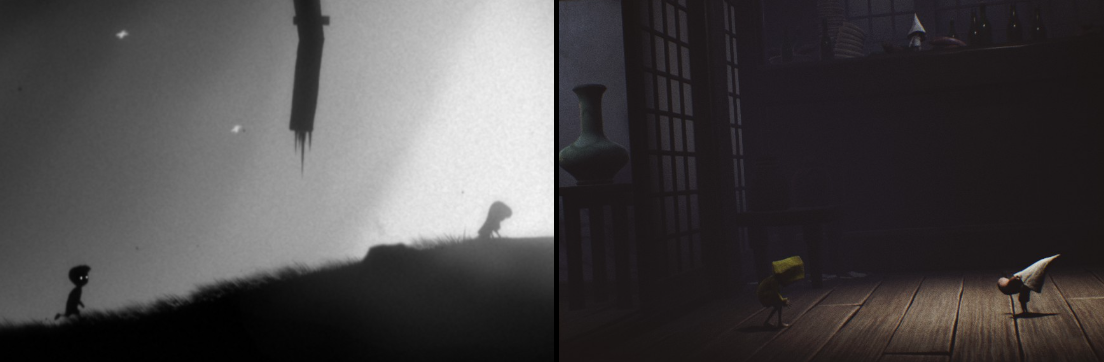
… Minimalism. There. I told you I’d say it a lot. That’s all I’m even going to say as an intro. How very minimalist of me.
It’s hard to really get into the plot of a game like LIMBO where the plot is notable via… the absence of plot. I feel like a music critic having to write a serious review of ‘4’33’; the song composed entirely of four minutes and thirty-three seconds of silence. You can waffle on about the powerful metaphors and symbolic importance for as long as you want, but sooner or later, you’re going to have to get into specifics, which is a difficult thing to do when there is so little defined information on the subject.
In spite of this challenge though, the general tone and especially the worldbuilding of LIMBO are absolutely phenomenal and manage to effectively convey the message that… everything hates you. Not even in a personal way, which would hardly make things better, but would at least make them more understandable. But even something as simple as a broken-down ‘HOTEL’ sign brings up huge questions; so… we can assume that there used to be civilization here. So what happened to it? Or is this a dying dream, a hazy recollection of memories on the boy’s trip through purgatory? Why is he trying to save his sister, did he fail her in life? Or is this an Orpheus and Eurydice situation where he is literally journeying into the underworld, or as the title would suggest, a purgatory of some sorts? None of these questions are answered, but the possibilities will occupy your mind for some time.
Little Nightmares also likes to leave a lot of questions intentionally unanswered – how did Six get on the Maw, why does the blind janitor have such creepy long arms, why are the twin chefs’ toilets directly next to each other, that can’t be hygienic – but it does answer some of the big questions; at least, enough of them for you to clearly understand exactly why it’s such a terrible fate to be caught by any of your pursuers. This is paced excellently though, the average player will go from having vague theories, to having some of those theories confirmed, and by the end of the experience – hell, five minutes after leaving the kitchen area – you will have a firm understanding of at least the basics of what is going on, although it still leaves you with a lot of questions and implications about the outside world, how this came to be, and… seriously, what is the deal with those toilets?
I can think of another advantage of LIMBO’s absolute refusal to provide a clear, digestible explanation; it prevents the narrative from ever being watered down. As a big fan of both titles, my YouTube recommendations fairly frequently provide me with Little Nightmares-related content, fan theories, ‘the story explained’ videos, and while I’m sure that they’re out there for LIMBO, any attempt to explain the story must first begin with a disclaimer that they have absolutely no idea if they’re actually explaining the story. Because there just isn’t enough for them to know if they’re right. And this is genuinely a positive; it keeps the mysteries of LIMBO rattling around in your head a little longer, and depending on your interpretation of the beginning of the game – the boy wakes up isolated in a forest, possibly with no idea where he is or how he got there – then it does provide the player with a strong connection to a character who also has no idea what is going on and would probably like to know. I’m aware that I’ve gone on for a little too long about just the effectiveness of LIMBO’s seeming lack of a plot, but that’s only because the very few implications you can actually make from the game should really be experienced yourself, especially when there are so few of them.
Likewise, while the plot of Little Nightmares is a lot easier to understand, it also contains just enough twists in the tale that I don’t actually want to explicitly cover them. The way the story is told – the way that information is provided to the player – is the result of some excellent pacing and direction. The player’s first glimpse of the Maw from the outside is awe-inspiring, and while not for all the right in-universe reasons, definitely for the right reasons from the point of view of the player. The camera angles, the decisions on which parts of the game to make optional and which parts you have to see, and recognize, and internalize as “… Oh. So that’s what’s happening,” are all executed pretty flawlessly. It’s impossible to fully explain the story of Little Nightmares, but it’s also impossible to miss it, or fail to understand at least the basics.
This is another tough call to make, because LIMBO and Little Nightmares both successfully leave you wanting to know more, but the fact that Little Nightmares accomplishes this while also giving you a clear enough idea of what exactly is going on, is enough for me to tip this point in its favour as well. And while this isn’t a guaranteed measure of quality, LIMBO’s vagueness is also such an integral part of the experience that if the developers offered to answer any lingering questions I had, I probably wouldn’t even want to ask them, for fear of ruining the mystery. Little Nightmares might win this on paper, but this is yet another area in which both games undoubtedly succeed, and any advantage is almost negligible.
Music

After four rounds of neck-and-neck contests decided by a combination of personal biases and occasional coin-flips, it feels a bit wrong to finish things on a category that I think is pretty clear-cut. LIMBO has a soundtrack, but it’s more of a collection of ambient background sounds to enhance the experience, while Little Nightmares has a soundtrack in the sense that… it’s an actual soundtrack, with like, music and stuff. Characters have chase themes, leitmotifs; there’s still plenty of atmospheric background noise, but the music is generally a lot more… musical.
That said, this (by now, predictably) minimalist approach to music is entirely fitting with the experience of LIMBO; if an environment suddenly started blaring One-Winged Angel at full volume then despite it being a good song in a good game, there would be no cohesion at all and the immersion would immediately be shattered. And LIMBO’s sound direction is incredibly impressive; it seems to know just the right moment to make every action you take sound intense and visceral, and also when to mute and subdue them, allowing you to be drowned out by the environment. The sound of the environment takes precedence over the sound of you, and why wouldn’t it? It’s more important than you are. But the longer you continue to survive – this particular piece plays during one of the game’s more challenging moments, if the sound of sawblades didn’t give that away – then the soothing ambient tone drowns out the environment as well, and leaves you with a feeling of… not safety, but solitude. Which is the best that you can hope for in the world of LIMBO.
Little Nightmares does not have that one killer track, but it has so many memorable themes that I struggled to choose one, but honestly, the title screen jingle is a perfect introduction to the game. There’s something very childish and dollhouse-y about the instruments, but with a very sinister undertone, it sounds like Ganondorf is playing the church organ in the background. The vocal chorus of oohs and hums is present throughout a lot of the songs, and it’s never not unsettling. It’s not enough to be off-putting, but it’s also definitely not a sign that you’re not going to have a good time. It’s a lot easier to comprehend than LIMBO, which isn’t strictly an advantage, but it’s not a disadvantage either.
For the next LIMBO track, I’m going to choose the finale, ‘Gravity Jump’, which shows a surprising integration between music and gameplay, because by this point, you are actively affecting gravity – at least until gravity just decides to start changing itself back and forth – which means that you really need to get your timing right. This is the final gameplay section before the game’s conclusion, and so it ends with a rather subdued success; music that really emphasizes that you might not have accomplished anything good or meaningful by getting this far, but you’ve still definitely accomplished something nonetheless. I’m speaking strictly in terms of gameplay because I really don’t want to try to deliver an objective explanation for the plot, but the way the music becomes muted – almost underwater-sounding – the more you progress, gives it an almost ethereal quality that’s incredibly fitting.
For my next choice for Little Nightmares, I am really stuck between ‘The Lady Circles’, which plays during the final confrontation, and ‘Six’s Theme Part II’, which plays over the scene following this before the credits begin to roll. They are both fantastic, but I think I have to go with Six’s Theme Part II, because it combines the soft leitmotif of Six, that you will have heard throughout the game every time she experiences hunger pains, with the theme of the Lady, the primary antagonist, and while the music isn’t nearly as effective without the accompanying scene, it’s also so incredibly effective with the scene that I feel comfortable including it, even though I can’t really go into any more detail than that for fear of spoilers. Just play the game, come back, and understand why I didn’t want to say more. I also just appreciate that my choices for highlighting the music are the first song you hear when booting up the game, and the last song you hear before the credits.
This is, regrettably, a pretty easy decision to make. LIMBO’s soundtrack works perfectly for LIMBO, but I have made no effort to listen to it outside of the game, and I had to listen to a few songs just to determine which two to highlight. For Little Nightmares, I struggled to come to terms with leaving out the Janitor’s chase theme, the Chefs’ chase theme, the… I don’t want to say ‘final boss’ because Little Nightmares isn’t the kind of game to have a climactic RPG-style showdown, but the music from your final encounter with the main antagonist as well. Little Nightmares has a soundtrack that works well in the game and also works pretty well outside of the game too. I can’t see it topping anyone’s Spotify, but I would be lying if I claimed not to find myself humming Six’s theme or the Lady’s theme at regular intervals in my day-to-day life. Little Nightmares wins this one.
Conclusion
Little Nightmares and LIMBO are two of my favourite horror games and I would strongly recommend them to anyone – not just fans of the genre, literally anyone with even a passing interest in playing a video game at all – so choosing a winner, and therefore a loser, is one of the toughest calls I’ve made in this Game VS Game series so far. With that said though, honestly, I feel quite confident in my decision. Sometimes my opinion on which game is objectively better differs from which game I personally prefer, but that is not the case this time. Which is why it gives me great pleasure to announce that in my opinion, the superior game by the very slightest of margins is…
…
…

Little Nightmares
This is the first outcome that I feel I need to actually do some work justifying, and that alone is a testament to what an unbelievably good game LIMBO is; truly one of the all-time indie greats. But I also can’t deny that I just think Little Nightmares is legitimately better. If I could highlight the one key way in which their approach favours Little Nightmares, it would be their approach to the story. LIMBO uses absence of information to confuse and terrify the player with events and observations that just don’t make sense, but Little Nightmares manages to do this while also offering more information regarding what the hell is going on. It adds, and yet it doesn’t suffer from any of the drawbacks. Also, in keeping with the ‘offering more while losing less’ theme, even something as minor as the wallpaper in Little Nightmares can offer Easter Eggs, such as the Janitor, the Nomes, and the Maw itself all being hidden in patterns throughout the game.
Little Nightmares succeeds in the same way that LIMBO does… while offering so much more. More clarity, more worldbuilding, more little touches, more detail. It offers more, and yet it retains the paranoid, atmospheric nature of not really knowing how or why anything is going on. You’re provided with answers, but they only raise further questions and imply that the explanations are even more unsettling. If Little Nightmares doesn’t do a better job than LIMBO, then it at least does the same job, with more. And to be clear, it never could have succeeded if LIMBO hadn’t provided a very clear base for them to improve upon, so its success is also LIMBO’s success.
And also, I sincerely believe that it’s a good thing for Little Nightmares to be a better game than LIMBO. It didn’t influence my decision at all, but to recall what I said at the start; you could look at this from the point of view of “Is a fantastic game released in 2017 better than a phenomenal game released in 2010?” And I think that in this case, yes. And that’s a really encouraging conclusion for the progression of the video game industry and increasing quality standards on the whole. I like that a 9/10 video game released ten years from now may objectively be better than a 10/10 video game released yesterday; I think that’s progress, and I think that it’s good.
But for all of the philosophical justifications, ultimately the reason why Little Nightmares triumphs today is just that I think it’s an incredibly well-made video game. If you only take two things away from my conclusion, I hope that they are this; one, I genuinely love both of these games very much and I sincerely think that Little Nightmares is just the tiniest bit better, and two… LIMBO would obviously have won if Playdead had just listened to those wise investors and given the protagonist a moustache. That would have given them a decisive edge for sure.
And so, thank you for reading and a happy Halloween to you all (yes, this blog was 360 days late rather than 5 days early) and I hope you’ll join me next time for… you know, I always promise a match and then do a different match instead. So I’d like to say maybe Golden Sun VS Mother 3 or God of War 3 VS Dante’s Inferno, but I can’t guarantee I won’t skip straight to inFamous VS Prototype instead. But I hope you’ll give it a chance regardless.
Thanks for reading!
-Dopefish

 The Dopefish